Understand the relationship behind the decision.
They lived it forward. You received it backward.
Presentation topics
Inside the Romance ScamHow trust becomes access—and why recognition can be complicated.
An examination of the relationship surrounding financial deception: credibility, intimacy, future promises, requests, contradictions, and continued investment. Participants consider how emotional attachment and practical decisions interact, including why evidence of fraud may not immediately resolve belief in the relationship.
Audience takeaways: Reconstruct the trust-building process; distinguish early uncertainty from information learned later; identify questions that explore relationship context without blame.
Designed for: Victim services, financial institutions, prosecutors, investigative teams, and professional conferences.
Ghost Flags: Before the Meaning Is ClearWhat color is a red flag before you know it is a red flag?
An early inconsistency may appear minor, understandable, or unrelated to other events. Its significance can become clearer only as information accumulates. This presentation examines how to notice and document those moments without treating every contradiction as proof of manipulation or assuming the person already knew what became apparent later.
Audience takeaways: Separate observation from interpretation; examine repetition and context; ask more precise questions about early shifts.
Designed for: Advocates, professional teams, universities, and public audiences.
Intimacy Pathways to Love and DeceptionHow the experience of connection can develop into reciprocity—or be used for leverage.
This presentation introduces my framework for examining how intimacy and trust develop, how a person becomes emotionally invested, and how that investment can be exploited. We examine recognizable changes: attention that creates an expectation of access, shared purpose that becomes obligation, or reassurance that becomes conditional on compliance.
Audience takeaways: Distinguish this framework from the five Intimacy Types; examine what behavior accomplishes over time; recognize the importance of autonomy, reciprocity, and context.
Designed for: Relationship professionals, victim services, universities, and organizations addressing exploitation.
The NO Test: What Happens When Someone Disagrees?Examining autonomy through responses to boundaries.
A relationship provides information when someone asks a question, changes their mind, declines a request, or makes an independent decision. This presentation examines the response and its consequences: discussion, pressure, withdrawal of affection, blame, intimidation, or punishment.
Audience takeaways: Look beyond the stated intention; examine repeated responses and consequences; use existing events to understand autonomy without encouraging unsafe confrontation.
Designed for: Public audiences, advocates, educational settings, and relationship professionals.
#iTrusted: Disclosure Without BlameTrusting someone should not become the thing you have to defend after they deceive you.
An examination of how professionals and families respond when someone discloses romance fraud or remains involved after concerns have been raised. We consider shame, secrecy, attachment, family frustration, and questions that preserve an opportunity for further disclosure.
Audience takeaways: Identify blaming assumptions; ask about promises, requests, and responses to questioning; consider how communication can affect willingness to remain engaged with support.
Designed for: Victim advocates, banks, prosecutors, investigators, community organizations, and family education programs.
Relationship Intelligence: Connection That Works in Real LifeCompatibility, intimacy, readiness, and the behavior behind the promise.
Drawing on my coaching, eharmony work, and E3 Relationship Intelligence role, this presentation examines what people need to understand about themselves and each other as relationships develop. Topics include the five Intimacy Types, values, partner selection, communication, and the difference between an apology and sustained repair.
Audience takeaways: Identify how connection is experienced; examine readiness and recurring choices; translate abstract relationship preferences into observable behavior.
Designed for: Public events, relationship-focused organizations, universities, and community audiences.
2026 National Training Institute
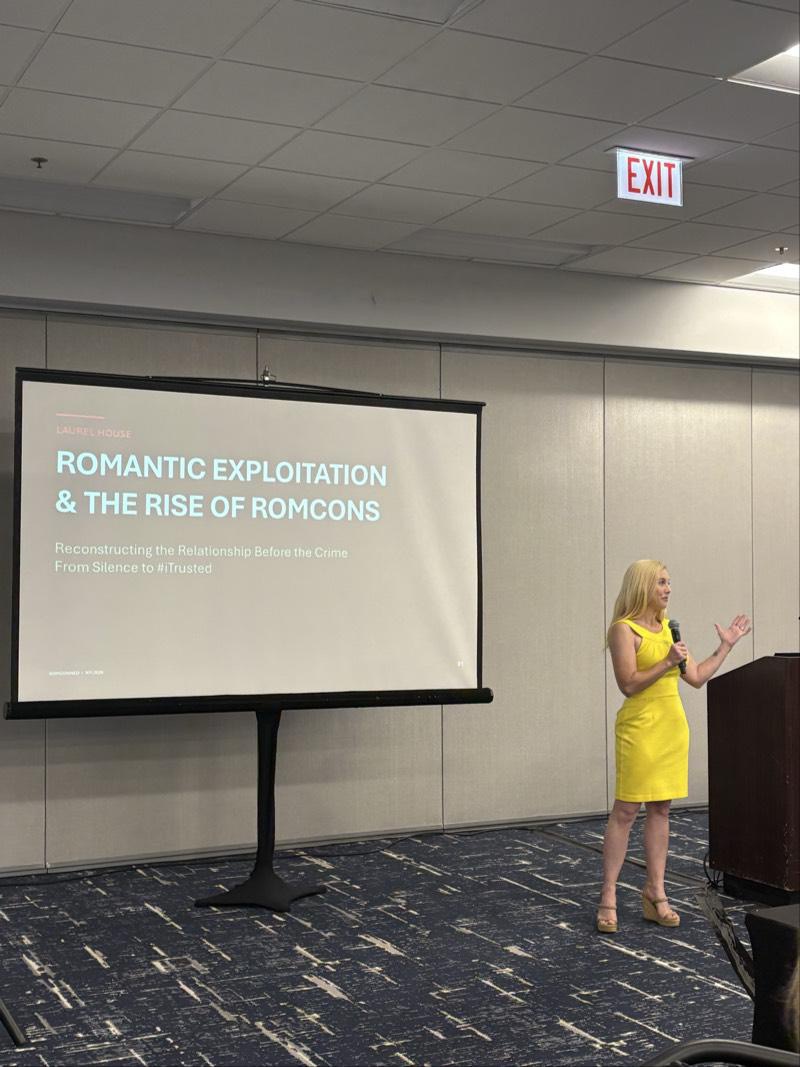
Romantic Exploitation & the Rise of RomCons: Reclassifying Victims of Emotional, Financial, and Identity-Based Theft — From Silence to #iTrusted